


If you’ve ever had a migraine, you already know there are no words that quite do it justice. One moment you are fine, and the next you are chasing lightning bolts across your vision, bracing for the throbbing pain and nausea you know are coming. Migraines don't just hurt — they steal entire days from you. And they always seem to arrive at exactly the wrong moment.
For so many people, the only option has been to retreat to a dark room and wait it out, hoping it passes before life demands you show up again. You deserve better than that.
Table of contents
- What are the Characteristics of Migraines?
- How Acupuncture Treats and Prevents Migraines
- Chinese Herbal Medicine is a Powerful Tool for Migraine Treatment
- Food Therapy for Migraine Prevention
- Cupping for Migraines
- Remember: Migraines Don’t Like Boring People
- Lifestyle Changes to Prevent Migraines
- Magnesium and Migraines
- Ready to Prevent Migraines?
What are the Characteristics of Migraines?
Migraines are far from a one-size-fits-all condition — they come in several distinct forms, each with its own characteristics.
The most common is migraine without aura, which involves moderate to severe throbbing headache, often accompanied by nausea, vomiting, and sensitivity to light and sound.
Migraine with aura includes these symptoms but is preceded or accompanied by neurological disturbances called auras — visual phenomena like zigzag lines or blind spots, tingling sensations, or difficulty speaking.
Chronic migraine is diagnosed when a person experiences headaches on 15 or more days per month, with at least eight of those meeting migraine criteria.
Hemiplegic migraine is a rare and more serious type that causes temporary motor weakness or paralysis on one side of the body, mimicking stroke symptoms.
Vestibular migraine primarily affects balance and coordination, causing vertigo and dizziness, sometimes without any head pain at all.
Retinal migraine involves temporary vision loss or visual disturbances in one eye.
Finally, menstrual migraine is triggered by hormonal fluctuations around the menstrual cycle and tends to be particularly intense.
Understanding which type a person experiences is crucial for finding the most effective treatment approach.
How Acupuncture Treats and Prevents Migraines
If you've ever lost a day or two to a migraine, you know that no amount of lying in a dark room quite cuts it. Migraines are one of the most debilitating conditions we treat at Cherry Blossom Healing Arts, our Washington DC acupuncture clinic.
Acupuncture is one of the most well-researched tools we have for treating and preventing migraines. Studies show that acupuncture is as effective as preventive migraine medications for reducing attack frequency without the side effects.
From a Traditional Chinese Medicine perspective, migraines typically involve a disruption of Qi and Blood flow in the channels of the head and neck, often connected to Liver Yang rising, Liver Qi Stagnation, Blood deficiency, or accumulated tension in the Gallbladder channel.
Acupuncture works by calming the nervous system, regulating the vascular tone of the blood vessels in the head, and releasing the deep muscular tension in the neck and suboccipital region that so often triggers an attack.
Patients who come in regularly for acupuncture typically see a massive reduction in both the frequency and severity of their migraines over time. We are so proud of the fact that many of our patients are able to reduce or eliminate their reliance on medication altogether.
Whether you're in the middle of a migraine or trying to stop the next one before it starts, acupuncture meets you where you are.
Chinese Herbal Medicine is a Powerful Tool for Migraine Treatment
Chinese herbal medicine is one of the most powerful tools we have for migraine treatment and prevention. Herbal formulas work around the clock, not just during your appointment, which makes them especially valuable for patients whose migraines are frequent, severe, or rooted in an underlying pattern that needs consistent support.
Classical formulas like Tian Ma Gou Teng Yin calm Liver Yang rising and reduce the vascular hyperreactivity that drives throbbing, one-sided migraines.
For migraines triggered by Blood deficiency, common in women, especially around the menstrual cycle, formulas built around Dang Gui, Shu Di Huang, and Bai Shao nourish the Blood and calm the channels that feed the head and eyes.
Chuan Xiong, one of the most important herbs in the Chinese pharmacopeia for head pain because it moves Blood stagnation and opens the channels of the head with remarkable specificity.
For patients with very high levels of stress, Xiao Yao San can be an important formula to help take the body out of fight or flight and calm the nervous system.
When your herbal formula is tailored to your individual pattern — not just your symptoms — it addresses the reason the migraines keep coming back, not just the pain itself. Most patients begin to notice a reduction in frequency and intensity within four to six weeks of consistent herbal treatment, and most of our patients find that combining herbs with regular acupuncture produces results neither could achieve alone.
Food Therapy for Migraine Prevention
What you eat and when you eat it matters more than most migraine patients realize. From a Traditional Chinese Medicine perspective, the Spleen and Stomach are responsible for transforming the food you eat into Blood and Qi, the two substances that nourish the body and the brain and keep the channels of the head flowing smoothly.
When the Spleen is weakened by cold foods, erratic eating habits, or skipped meals (this also tends to happen most when patients are under extreme stress), the body loses its nourishment and this creates the perfect conditions for a migraine to take hold.
This is why keeping your blood sugar stable throughout the day is one of the most powerful and underappreciated migraine prevention strategies. Skipping meals or going long stretches without eating drops blood sugar and depletes Qi.
Prioritizing warm, cooked foods over cold and raw helps protect Spleen function, while Blood-nourishing foods like dark leafy greens, beets, black sesame seeds, walnuts, eggs, and small amounts of high-quality meat give your body the raw materials it needs to keep the body fed and calm.
Foods rich in magnesium like pumpkin seeds and almonds round out a migraine-preventive diet that is as practical as it is grounded in thousands of years of clinical wisdom.
You deserve to feel better every day, and the choices you make at the table are part of how we get you there.
Cupping for Migraines
Cupping might not be the first thing that comes to mind when you think about migraine prevention, but for patients who carry their stress in their neck and shoulders, it can be a game changer.
One of the most consistent findings in migraine patients is severe tension in the trapezius, scalene, and suboccipital muscles which are the muscles at the base of the skull that directly influence blood flow and nerve signaling to the head. When those muscles are chronically tight, they restrict circulation through the vertebral arteries, and create a constant low-grade pressure that makes the brain far more susceptible to triggering a full migraine.
Cupping releases that tension in a way that is difficult to achieve through other means because the suction lifts the tissue upward rather than compressing it downward, creating space in the fascia, drawing fresh blood into muscle tissue, and breaking up the adhesions that have often been building for months.
Patients frequently notice that after a cupping session focused on the upper back, neck, and base of the skull, the tight, pressurized feeling that often precedes a migraine simply isn't there.
Used consistently as part of a comprehensive treatment plan, cupping helps keep the muscular and fascial environment around the head and neck calm enough that the nervous system has far fewer opportunities to spiral into an attack.
Remember: Migraines Don’t Like Boring People
I like to tell my patients that migraines don’t like boring people. Sticking to a consistent routine is one of the best things you can do to prevent migraines. In fact, managing migraines often comes down to identifying personal triggers and making consistent lifestyle adjustments.
One of the most effective strategies is maintaining a regular sleep schedule, going to bed and waking up at the same time each day, since both too little and too much sleep can trigger an attack.
Staying well-hydrated is equally important, as dehydration is a common but often overlooked trigger. This means it’s a good idea to drink plenty of water but you might also need to supplement with electrolytes.
Keep caffeine levels low and consistent. When you change how much caffeine you are taking in day to day, it can trigger a migraine.
Eating regular meals and avoiding skipping them helps keep blood sugar stable, which also prevents migraines. Keeping a migraine journal to track potential triggers — such as certain foods, stress levels, weather changes, or hormonal shifts — can be incredibly valuable in pinpointing personal patterns. Also keep in mind that migraines can be worse during certain weather or at certain times of year such as the summertime.
Periods of high stress also tend to be when migraines get worse. One reason is that stress tends to cause us to get out of our routines. There is more to do so we sleep less. Sometimes we are so busy we might skip lunch.
Lifestyle Changes to Prevent Migraines
Stress management is another cornerstone of migraine prevention. Practices like yoga, meditation, deep breathing exercises, and progressive muscle relaxation can help reduce the frequency of attacks.
Regular, moderate aerobic exercise like walking or swimming has also been shown to reduce migraine frequency over time, though it's important to warm up gradually, as sudden intense exercise can sometimes trigger a migraine.
Limiting alcohol, particularly red wine and beer which are common triggers, is also strongly recommended. For those sensitive to sensory stimuli, reducing screen time, wearing blue-light-blocking glasses, and avoiding strong perfumes or bright lights can help keep migraines at bay.
Finally, working closely with your acupuncturist to explore preventive medications or supplements such as magnesium can complement these lifestyle changes for a more comprehensive management plan.
Magnesium and Migraines
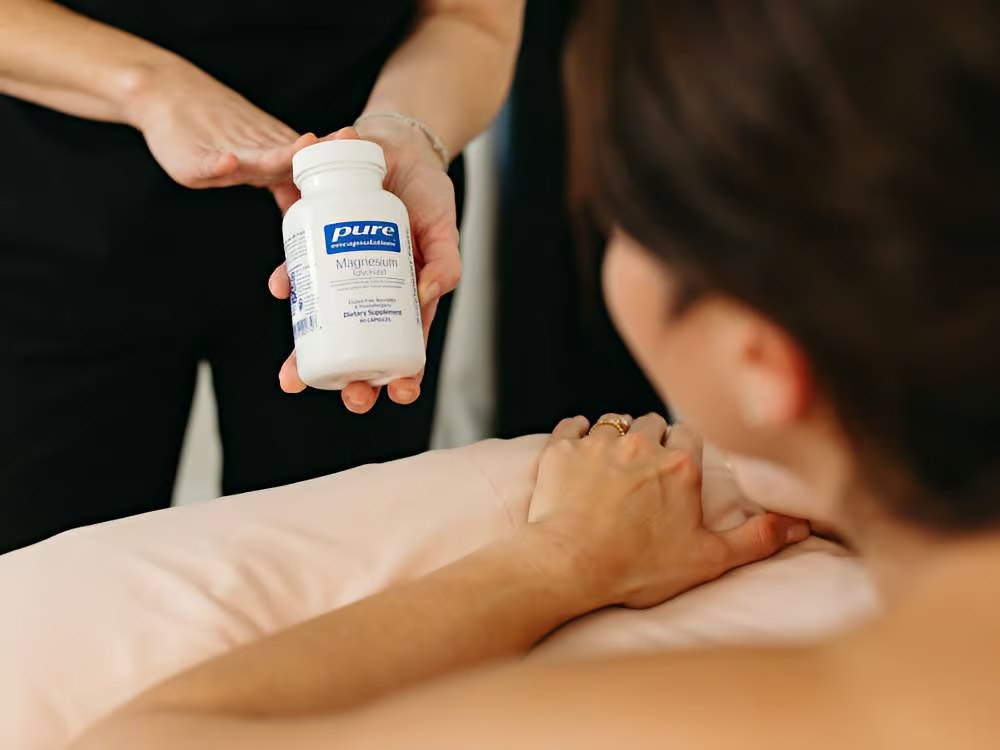
If you suffer from migraines, magnesium is your best friend. We typically prescribe two types of magnesium in our Washington, DC acupuncture clinic — magnesium citrate and magnesium glycinate. Magnesium glycinate taken before bed is outstanding for reducing migraine frequency. It is well tolerated and well-absorbed in the system.
Magnesium citrate can be better for patients with constipation. Magnesium citrate is also generally less expensive than other forms of magnesium.
If you suffer from menstrual migraines, increase the dosage of magnesium one week before your expected period starts. This can help prevent migraines and cramps.
Check with your doctor or acupuncturist before starting magnesium, especially if you are taking medications.
Ready to Prevent Migraines?
Cherry Blossom Healing Arts provides personalized, evidence-based acupuncture care in Washington, DC. By incorporating acupuncture into treatment plans, our practitioners aim to improve clinical outcomes while supporting the body’s natural healing processes.
At Cherry Blossom Healing Arts, we treat migraines the way we treat every condition — by looking at the whole person, not just the symptom. Whether you're looking to reduce how often they happen, how bad they are, or get off medication that isn't working for you anymore, we'd love to help you build a plan that actually works.
To get started, head to our booking page and schedule your first appointment. If you’d like us to check your insurance benefits, we’d be happy to take care of that for you. We are in-network with CareFirst/BlueCross and Aetna.
About the Author

Hi! I’m Elyse, the go-getter who founded Cherry Blossom Healing Arts. I’m 100% a healer who loves to help people feel better! I absolutely love practicing acupuncture in Washington, DC.