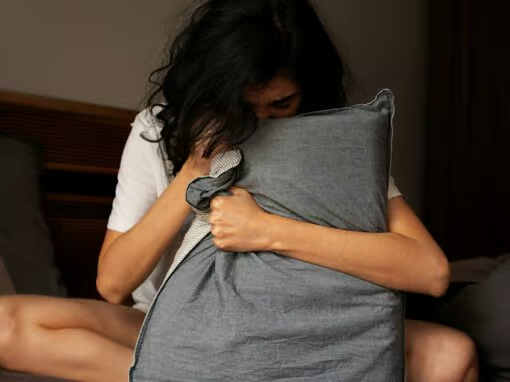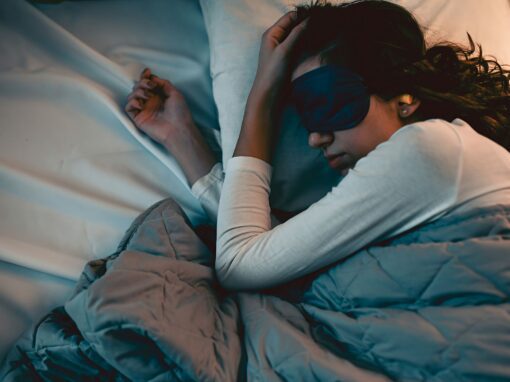


You know the feeling. It's 11pm, you're exhausted, and your brain is still running through tomorrow's calendar. You finally fall asleep and wake up three hours later, wired again. By the time your alarm goes off, you're behind before the day even starts.
If this is your normal, you're not broken and you're not alone. Stress is the single most common thing we treat at our acupuncture clinic in Washington, DC. It shows up almost exactly the same way for a lot of patients. Tired body, racing mind, a nervous system that never quite gets the memo to stand down.
The good news is that this pattern responds well to treatment. You deserve better than white-knuckling through another sleepless week.
Table of contents
- How Stress and Sleep Are Connected
- How Acupuncture Calms the Nervous System
- Acupuncture Points Commonly Used for Stress and Sleep
- Chinese Herbs That Support Calm and Sleep
- What to Expect at Your First Visit
- Insurance and Getting Started
- Anxiety, Stress & Sleep FAQs
- Ready to Feel Less Wired and More Rested?
How Stress and Sleep Are Connected
In Traditional Chinese Medicine, anxiety and insomnia are usually read as a Liver Qi pattern or a Heart pattern. Qi (pronounced "chee") is often understood as the body's functional energy. When it gets constrained by stress, it tends to stagnate rather than flow, which shows up as a restless, racing mind, tight shoulders, and a body that won't power down at night.
Biomedicine tells a related story. Chronic stress keeps your sympathetic nervous system, your body's fight-or-flight switch, turned on longer than it should be. That's the same system that's supposed to quiet down so you can fall and stay asleep. When it stays activated, your sleep gets shallow and your days feel foggy.
Both views point to the same fix. Help the nervous system settle, and sleep tends to follow.
How Acupuncture Calms the Nervous System
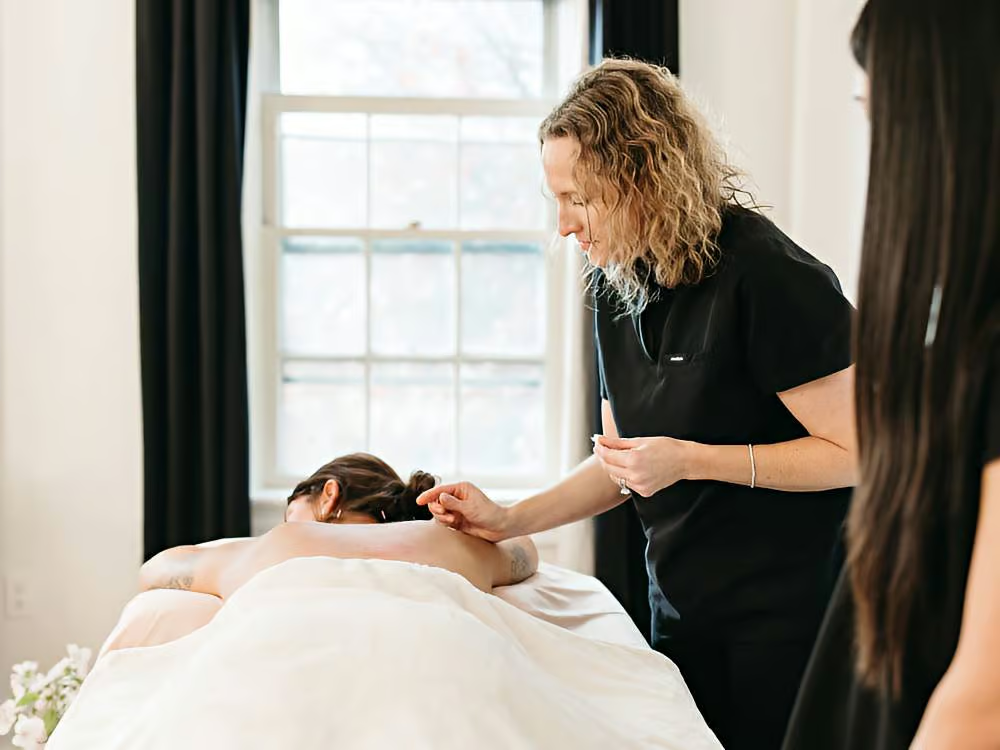
Yes, acupuncture can help with stress, anxiety, and sleep, and there's a real mechanism behind it. Fine needles placed at specific points activate your parasympathetic nervous system, the "rest and digest" counterpart to fight-or-flight. Heart rate slows. Blood pressure eases. Your body gets the physical signal that it's safe to relax.
Treatment also prompts your body to release endorphins and supports serotonin and norepinephrine activity, the same neurotransmitter systems linked to mood regulation. Many patients tell us the most relaxed they feel all week is during and right after a session. If you want the fuller picture, we've also written about how acupuncture helps with anxiety.
Acupuncture Points Commonly Used for Stress and Sleep
Specific acupuncture points come up again and again in treating anxiety and insomnia:
- Buddha's Triangle, a set of three points used together to calm and relax, helps the parasympathetic system take over
- Shen Men, an ear point whose name translates to "spirit gate," is commonly used to quiet a racing mind
- The Four Gates, a combination of four points on the hands and feet, is traditionally used to move stuck Qi and calm an overactive mind, similar in spirit to the herbal formula Xiao Yao San
- Additional points selected based on where you're holding tension and what your specific pattern looks like
Your acupuncturist will build your point selection around your body, not a generic protocol.
Chinese Herbs That Support Calm and Sleep
Herbal medicine can work alongside acupuncture or on its own, especially for patients managing symptoms between sessions. A few formulas and herbs our herbalists reach for often:
- Xiao Yao San (Free and Easy Wanderer) eases Liver Qi constraint and nourishes the blood that lets that Qi move freely. It's a classic formula for stress-related irritability, tension, and sleep trouble.
- Jia Wei Xiao Yao San is a variation of Xiao Yao San with added heat-clearing herbs, often used when insomnia comes with a wired, overheated feeling.
- Suan Zao Ren Tang (Sour Jujube Decoction) nourishes the blood and calms the spirit, and is traditionally used for the specific pattern of lying awake exhausted but unable to settle the mind.
- Gui Pi Tang (Restore the Spleen Decoction) supports patients whose stress shows up as fatigue alongside poor sleep, addressing both an overworked mind and a depleted body.
These formulas may help calm the nervous system and support better sleep, though results vary by person and pattern. Herbs are always custom-built for your symptoms, not sold off a shelf.
If you're on an SSRI or another anxiety medication, tell your acupuncturist and your prescribing doctor what you're taking. Our herbalists regularly work with patients on medication and coordinate formulas around it. This is a conversation to have openly, not something to navigate on your own.
What to Expect at Your First Visit
Your first acupuncture visit starts with a real conversation, not just a needle. Your practitioner will ask about your sleep, stress, health history, and what a good day and a bad day look like for you. From there, they'll map out a custom treatment plan. That plan covers how often to come in, whether herbs make sense for you, and simple home-care changes that support the work.
The session itself is calm. Most patients rest on a treatment table for about an hour with needles in place, often drifting off or zoning out completely. If you're nervous about needles, say so. Many first-timers barely feel them.
Insurance and Getting Started
We're in-network with CareFirst/BlueCross and Aetna, and we'll check your benefits for free before you commit to anything. Acupuncture for stress and anxiety is often a covered benefit, which surprises a lot of first-time patients.
Anxiety, Stress & Sleep FAQs
Does acupuncture really help anxiety, or is it placebo?
Studies show acupuncture affects real, measurable systems. It activates the parasympathetic nervous system, supports endorphin release, and influences neurotransmitters tied to mood. It's not a replacement for therapy or medication, but it's a legitimate complementary treatment with mechanisms behind it, not just relaxation.
How many sessions before I sleep better?
It varies by person, but many patients notice a difference within the first few sessions, with fuller results building over four to six weeks of consistent treatment. Your acupuncturist will build a plan around your specific pattern and adjust as you go.
Can I do acupuncture alongside my anxiety medication or therapy?
In most cases, yes. Many of our patients combine acupuncture with therapy, SSRIs, or both. We coordinate with your other providers and can help manage medication side effects when appropriate. Always loop in your doctor on any changes.
Acupuncture or herbs, which is better for sleep?
They tend to work best together. Acupuncture helps in the moment and cumulatively over a course of treatment, while herbs support your nervous system between sessions. Your acupuncturist can help you decide where to start.
Ready to Feel Less Wired and More Rested?
We treat the whole person, not just the sleepless nights or the racing thoughts.
To get started, head to our booking page and schedule your first appointment. If you'd like us to check your insurance benefits, we'd be happy to take care of that for you. We are in-network with CareFirst/BlueCross and Aetna.
About the Author

Hi! I’m Elyse, the go-getter who founded Cherry Blossom Healing Arts. I’m 100% a healer who loves to help people feel better! I absolutely love practicing acupuncture in Washington, DC.