

We all eat, and we all want to eat in a way that nourishes and heals our body. There are many books, cookbooks, blogs, and posts about what you should eat. A lot of the advice seems to contradict what you just read five minutes ago. It can feel pretty overwhelming and make you question yourself. I will endeavor to simplify things and explain nutrition theory from a Traditional Chinese Medicine (TCM) perspective.
Table of contents
Eastern vs. Western Views on Nutrition
First, let me start by letting you know that Eastern guidance on nutrition is a bit different than guidance in the west. In the west, a big part of the focus is the four food groups and the food pyramid, which changes with regularity. In Eastern medicine, everything is relative to a person’s constitution, so the guidance varies from person to person. There is also a greater emphasis on eating with the seasons in TCM.
Also, in Western medicine, a huge emphasis is placed on the quantity of food and foods are broken down into their parts – carbs, proteins, fats, sugars, vitamins, and minerals. In Eastern medicine, there is a greater weight placed on the quality of food rather than the quantity of food.
If you have ever eaten a wild blueberry next to a store bought blueberry, you might have some idea of what I mean.
Food is Medicine
Dietary therapy has two main branches in TCM, prevention and cure. I will use hemorrhoids as an example. In order to prevent hemorrhoids, we would suggest you eat more nuts, seeds, fruits and vegetables, and increase your water intake in order to prevent constipation.
However, if you have hemorrhoids already, there is a wonderful TCM food cure where you eat a banana, then blend the banana peel with water and drink it.
In TCM, foods In Traditional Chinese Medicine, foods are categorized by flavor, temperature, and function, not just nutrients alone.
- Protein is considered sweet/salty, warming to neutral in temperature. It builds Qi, Blood, and Yang.
- Fruits and vegetables are more cooling in nature. They nourish Yin and help with elimination.
- Dairy is sweet, cooling and moistening, but could weaken digestion if too much is consumed.
- Beans, legumes, and grains are sweet and neutral in flavor. They help to nourish and build Qi. They are the digestive foundation and support the Spleen and Stomach which help your body digest everything.
- Spices are aromatic and help to balance the five flavors because spices can be cooling or warming. They also can be all five flavors – pungent/spicy, sweet, bitter, salty, or sour.

The Five Flavors in TCM
- Pungent/Spicy - Dispersing, releasing, and warming ex: garlic, ginger, nutmeg
- Bitter - Purging, cooling, descending ex: kale, coffee
- Salty - softening, moistening ex: seaweed, salt
- Sweet - nurturing and tonifying ex: grains, root vegetables
- Sour - astringing, collecting ex: lemons, kombucha
Universal TCM Dietary Wisdom
Even though Eastern medicine providers will individualize dietary guidance, here are a few guidelines that apply universally:
- Chew your food more thoroughly. The more food is broken down, the easier it will be for your body to digest.
- Don’t eat late at night. Try not to eat after 8:00pm. Your body will digest better if you don’t go to bed on a full stomach.
- Don’t make your last meal your largest meal. Think of food as fuel. We need to fuel our daily activities more than our sleep. A Chinese proverb advises, “Eat breakfast as a prince, lunch as a king, and dinner as a pauper.”
- Avoid cold (or iced) drinks and foods. Digestion, like many chemical processes, slows down at lower temperatures. Eating warm, cooked foods is one of the easiest ways to improve digestion.
- Reduce or completely eliminate processed foods. When foods are processed and packaged, much of their nutritional value gets lost and they also become harder to digest. Opt for fresher foods and shop the perimeter of the grocery store.
- Improve the quality and vitality of your foods. Choose locally grown and seasonal foods whenever possible. Eating foods when they are in season makes them taste better and help your body stay attuned to seasonal changes.
- Filter your water. If possible, filter your water to make sure that what you are drinking is the highest quality without contaminants.
- Eat all five colors and all five flavors to keep your diet energetically balanced. The five flavors are: sweet, salty, pungent/spicy, bitter, and sour. The five colors are: white, blue/black, red, green, and yellow/orange. Eating all of these will ensure you get a variety of nutrients and types of food.
What Should Your Plate Look Like?
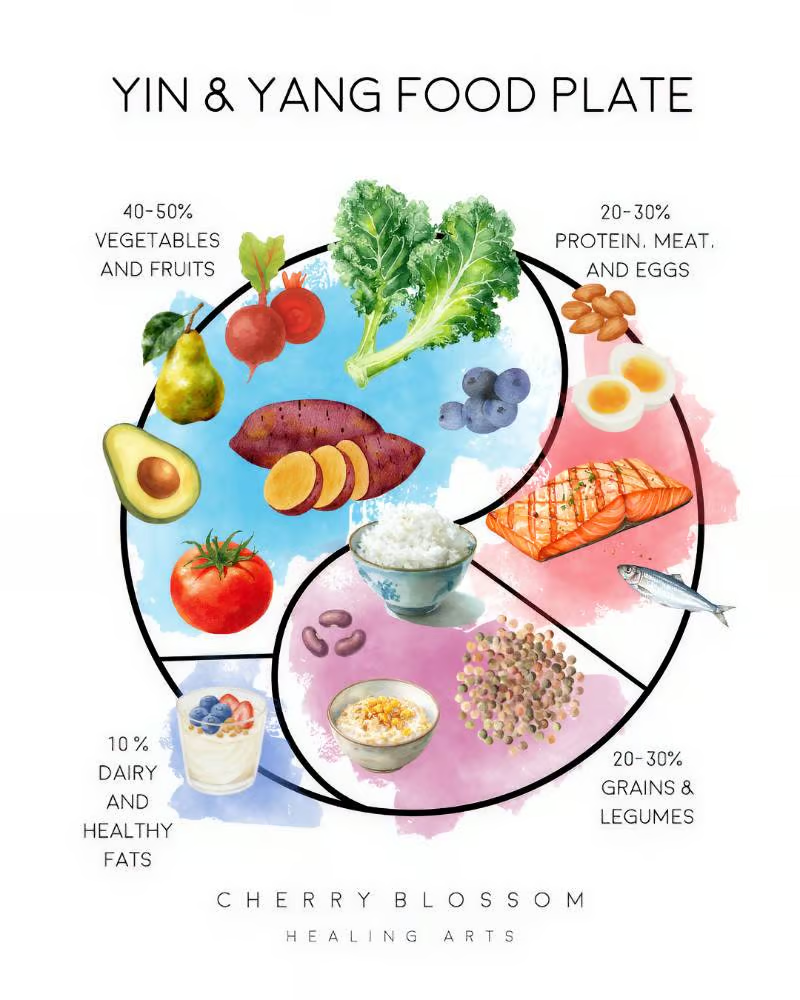
Most people do really well eating about 30-40% of their plate as vegetables and 10-20% as fruits. More fruits should be eaten in the summer so you can think of it like this – 10% of your plate should be fruits in winter, but 20% of your plate should be fruits in summer. These are cleansing and help the body with elimination. Be sure to eat the rainbow and a variety of flavors.
Protein such as fish, nuts, meat, and legumes should account for 20% of your plate. Protein is nourishing and building. Protein also helps to anchor the blood sugar.
Dairy is not eaten much in the east, but we do eat dairy in the United States. Dairy and healthy fats, such as olive oil, should make up about 10% of your plate.
Your plate should be about 30% whole grains such as rice, quinoa, and amaranth. These will help to nourish your body’s digestive system and provide you with good, sustained energy – especially if you eat whole grains rather than processed foods.
As you can see from this graphic, eating in this way provides a balance between building foods and cleansing foods. It also balances temperature so foods aren’t too warming, or too cooling. After all, acupuncture and TCM really is a medicine meant to balance.
Ready to Nourish Your Body?
If you could use some digestive support, or guidance on what to eat, then give acupuncture and herbal medicine a try. Your acupuncturist will use your tongue, pulse, medical history, and current symptoms to create a completely customized treatment plan that is just for you — because you deserve to feel better. To get started, head to our booking page and schedule your first appointment. If you’d like us to check your insurance benefits, we’d be happy to take care of that for you. Many insurance plans cover acupuncture as an adjunct therapy for mental health. Our acupuncture clinic in Washington, DC is in-network with CareFirst/BlueCross and Aetna.
About the Author

Hi! I’m Elyse, the go-getter who founded Cherry Blossom Healing Arts. I’m 100% a healer who loves to help people feel better! I absolutely love practicing acupuncture in Washington, DC.